📖 5 min read
The rise of generative AI marks a paradigm shift in content creation, moving beyond traditional methods and opening doors to entirely new possibilities. These AI models, capable of generating text, images, audio, and even video, are poised to revolutionize how businesses and individuals approach content production. From automating repetitive tasks to sparking creative ideas, generative AI tools are empowering creators to achieve more in less time and with greater personalization. Understanding the capabilities and potential impact of generative AI is crucial for anyone involved in content creation, marketing, or digital strategy.
1. Understanding Generative AI
Generative AI refers to a class of artificial intelligence algorithms that can generate new, original content based on the data they have been trained on. Unlike traditional AI systems that primarily analyze and classify existing data, generative AI models are designed to create novel outputs that resemble the training data but are not exact copies. These models use complex neural networks to learn the underlying patterns and structures of the data, enabling them to generate realistic and coherent content.
A prime example of generative AI is the transformer-based model, which underpins many popular applications such as ChatGPT for text generation, DALL-E 2 and Midjourney for image creation, and various tools for generating music and audio. These models are trained on vast datasets, allowing them to understand context, style, and nuances in the data and then apply that knowledge to generate new content. For instance, an image generation model trained on millions of paintings can create a new artwork in a specific style, even if that specific artwork never existed before.
The practical implications of generative AI are far-reaching, impacting industries from marketing and advertising to entertainment and education. Businesses can use these tools to automate content creation, personalize customer experiences, and generate creative assets for campaigns. The ability to rapidly produce high-quality content at scale can significantly reduce costs and improve efficiency, allowing organizations to focus on strategic initiatives and innovation.
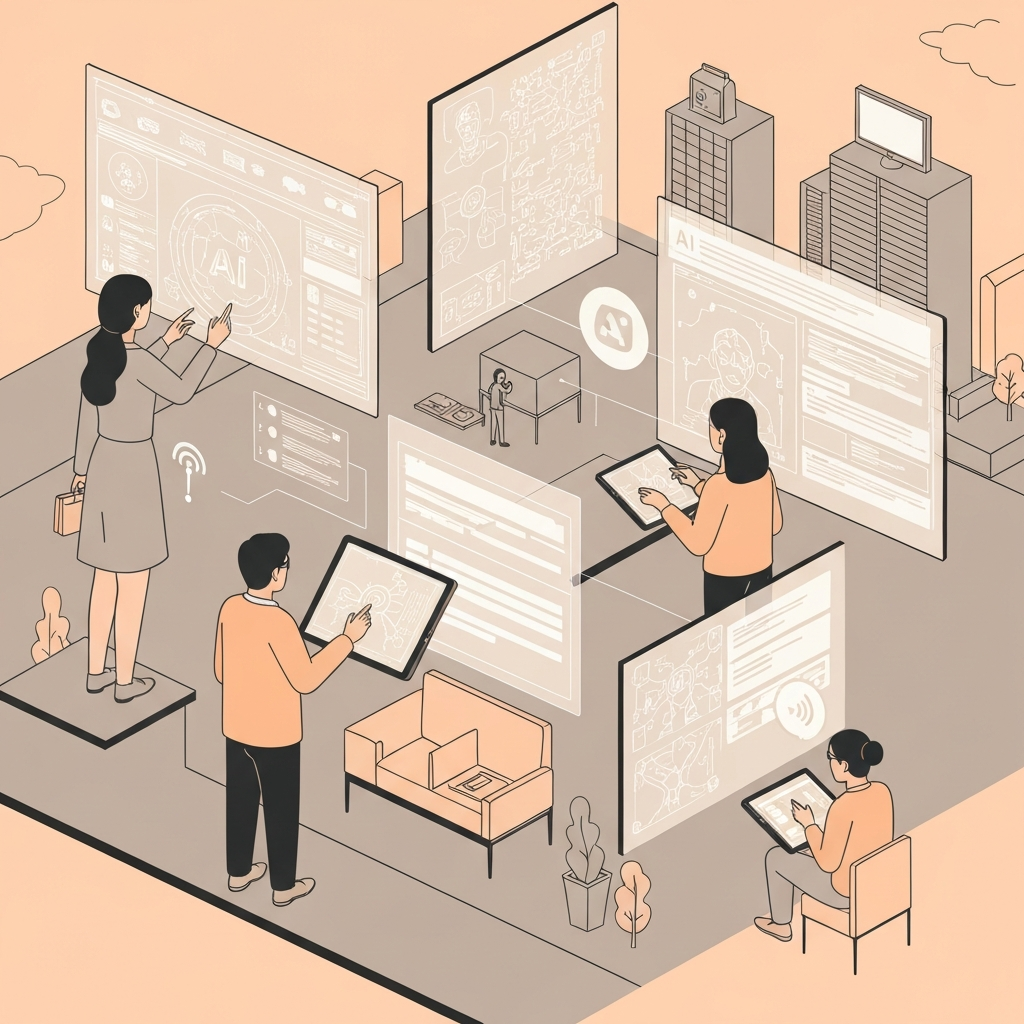
2. Applications in Content Creation
Generative AI is being applied to a wide range of content creation tasks, streamlining workflows and enabling new forms of creative expression. Its versatility allows it to be integrated into various stages of the content creation process, from ideation to production and distribution. Here are some key applications:
- Text Generation: Generative AI can produce various forms of written content, including blog posts, articles, marketing copy, product descriptions, and even scripts. Tools like ChatGPT can assist in brainstorming ideas, drafting content, and refining existing text, significantly reducing the time and effort required to create high-quality written materials. Imagine a marketing team using AI to generate multiple variations of ad copy, testing them to optimize performance, and ultimately increasing conversion rates.
- Image and Video Generation: AI models like DALL-E 2 and Midjourney can create stunning images and videos from text prompts, allowing users to visualize ideas and generate unique visual content without requiring extensive design skills or resources. This technology is particularly useful for creating social media content, advertising visuals, and even concept art for games and films. An architect, for example, could use AI to quickly generate multiple renderings of a building design based on different parameters, providing clients with a range of options to choose from.
- Audio and Music Generation: Generative AI can also create original music and audio content, offering new possibilities for musicians, podcasters, and audio producers. These tools can generate background music, create sound effects, and even compose entire songs in various genres. Consider a podcast creator using AI to generate intro and outro music, ensuring a consistent and professional sound without the need for expensive licensing agreements.
3. Prompt Engineering for Optimal Results
Effective prompt engineering is key to unlocking the full potential of generative AI. A well-crafted prompt can guide the AI model to generate the desired output with greater accuracy and relevance.
Prompt engineering involves designing and refining the input prompts provided to generative AI models to elicit the desired responses. The quality of the prompt directly impacts the quality of the generated content, making it a critical skill for anyone working with these tools. A poorly designed prompt can lead to irrelevant, nonsensical, or low-quality output, while a well-crafted prompt can unlock the AI's creative potential.
To improve prompt engineering, consider using clear and specific language, providing context and examples, and iteratively refining the prompt based on the AI's responses. Experiment with different phrasing, keywords, and formatting to see how they affect the output. For instance, instead of simply asking an AI to "write a blog post," provide a detailed brief outlining the target audience, key topics, desired tone, and length. Then, review the generated content and refine the prompt based on the results.
Mastering prompt engineering is an ongoing process that requires experimentation and continuous learning. As generative AI models evolve, new techniques and best practices will emerge. By investing time and effort in developing your prompt engineering skills, you can maximize the value of these powerful tools and create compelling content that resonates with your audience. Companies can invest in training programs for their content creators, teaching them how to effectively use AI tools and engineer prompts for specific use cases, leading to improved content quality and efficiency.
Conclusion
Generative AI is reshaping the landscape of content creation, offering unprecedented opportunities for efficiency, personalization, and innovation. By understanding the capabilities of these tools, embracing prompt engineering, and integrating AI into existing workflows, content creators can unlock new levels of productivity and creativity. This technology is not meant to replace human creativity but rather to augment it, enabling creators to focus on strategic initiatives and develop more engaging and impactful content.
Looking ahead, the future of content creation will be increasingly driven by AI-powered tools and techniques. As these models become more sophisticated and accessible, they will continue to transform how content is created, distributed, and consumed. Staying informed about the latest trends and advancements in generative AI is essential for anyone seeking to remain competitive in the rapidly evolving digital landscape. The integration of AI ethics into content creation workflows will also be a crucial topic moving forward, ensuring responsible and unbiased content generation.
❓ Frequently Asked Questions (FAQ)
How accurate is the content generated by AI?
The accuracy of content generated by AI depends heavily on the quality of the training data and the prompt provided. While AI models can generate coherent and grammatically correct text, they may sometimes produce factual errors or biased information. It's crucial to fact-check and verify any content generated by AI before publishing it. Implementing a human review process is essential to ensure accuracy and maintain the integrity of the content. This helps avoid spreading misinformation or presenting biased perspectives.
Can generative AI replace human content creators?
Generative AI is unlikely to completely replace human content creators, but it will undoubtedly augment their capabilities. While AI can automate many repetitive tasks and generate initial drafts, human creativity, critical thinking, and emotional intelligence are still essential for producing truly engaging and impactful content. The most successful content creation strategies will likely involve a collaboration between humans and AI, leveraging the strengths of both to create high-quality content that resonates with audiences. This collaborative approach allows for a balanced and nuanced output.
What are the ethical considerations of using generative AI for content creation?
Using generative AI for content creation raises several ethical considerations, including issues of copyright infringement, bias, and misinformation. It's important to ensure that AI-generated content does not violate any intellectual property rights and that the AI models are trained on diverse and representative datasets to avoid perpetuating biases. Furthermore, it's crucial to clearly disclose when content has been generated by AI to maintain transparency and build trust with audiences. Developing ethical guidelines and best practices for using generative AI is essential to mitigate these risks and promote responsible innovation.
Tags: #GenerativeAI #AIContentCreation #PromptEngineering #ArtificialIntelligence #FutureofWork #ContentStrategy #DigitalMarketing