📖 5 min read
In today's digital age, data security is more critical than ever. When it comes to disposing of old computers, hard drives, or other storage devices, simply deleting files isn't enough to ensure your sensitive information remains confidential. Data erasure, also known as data wiping, is the process of securely overwriting the data on a storage device, rendering it unreadable and unrecoverable. Understanding different data erasure techniques and their effectiveness is essential for individuals and organizations alike to protect themselves from data breaches, identity theft, and potential legal liabilities. This guide provides a comprehensive overview of various secure deletion methods, helping you make informed decisions about safeguarding your data.
1. Overwriting Data
Overwriting is a fundamental data erasure method that involves replacing existing data with new data. This process makes the original data difficult, if not impossible, to recover using standard data recovery techniques. The effectiveness of overwriting depends on the number of passes, the type of data used for overwriting, and the sophistication of the data recovery tools employed by potential adversaries.
Multiple-pass overwriting, which involves writing different patterns of data multiple times, significantly increases the difficulty of data recovery. Common standards like the U.S. Department of Defense (DoD) 5220.22-M standard specify a 7-pass overwriting process, while other methods employ a 3-pass or even a single-pass overwrite. For example, a 3-pass overwrite might involve writing all zeros, then all ones, then a random pattern. Each additional pass makes data recovery exponentially more challenging.
Overwriting is a relatively straightforward and cost-effective method for data erasure, especially for hard drives and SSDs that are still functional. However, its effectiveness can be limited by factors such as bad sectors on the hard drive, wear leveling algorithms in SSDs, and the potential for forensic recovery techniques to retrieve residual data. Choosing the correct tool and overwriting standard is paramount to achieving secure data erasure.
2. Degaussing
Degaussing is a powerful data erasure method that uses a strong magnetic field to disrupt the magnetic domains on a hard drive or other magnetic storage media, rendering the data unreadable. This method is particularly effective for hard drives and magnetic tapes, as it completely scrambles the data patterns stored on the media.
- Types of Degaussers: There are two main types of degaussers- bulk degaussers and wand degaussers. Bulk degaussers generate a uniform magnetic field capable of erasing an entire hard drive in one pass. Wand degaussers, on the other hand, are handheld devices that require manual application of the magnetic field over the surface of the media.
- Effectiveness and Limitations: Degaussing is considered a highly effective data erasure method, especially for hard drives and magnetic tapes. However, it is not suitable for all types of storage media, such as solid-state drives (SSDs) and flash memory. SSDs store data electronically rather than magnetically, so degaussing has no effect on their data. Furthermore, degaussing typically renders the storage media unusable, making it unsuitable for reuse.
- Certification and Compliance: When choosing a degaussing service or equipment, it's essential to look for certifications and compliance with industry standards, such as those set by the National Security Agency (NSA) or the U.S. Department of Defense (DoD). These certifications ensure that the degaussing process meets specific security requirements and effectively erases data. Proper documentation and chain of custody are vital for maintaining compliance and demonstrating due diligence.
3. Physical Destruction
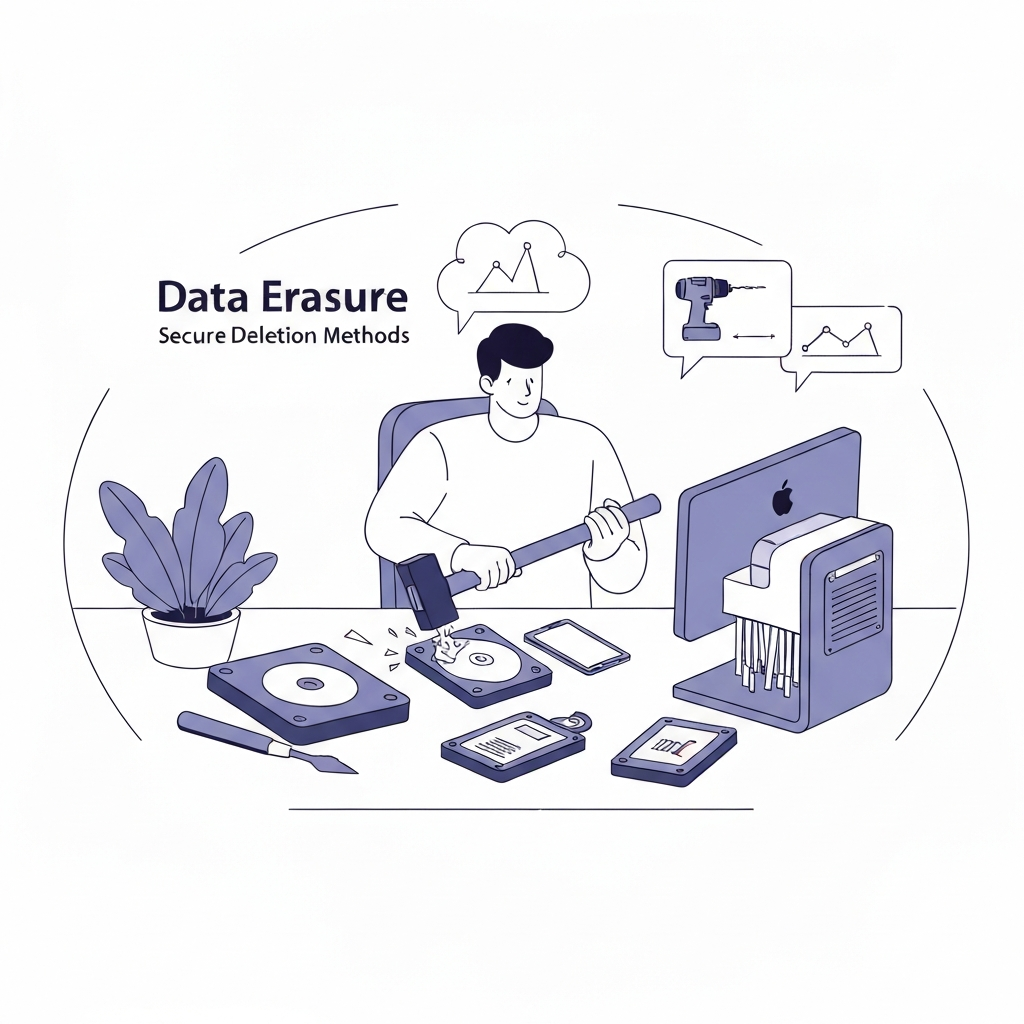
Physical destruction is the most absolute method of data erasure, guaranteeing that data is irrecoverable. This method involves physically destroying the storage media to the point where it is impossible to retrieve any data.
Physical destruction is often the preferred method for highly sensitive data or when the storage media is damaged or unreliable. While it renders the media unusable, it provides the highest level of assurance that data cannot be recovered by any means. Various physical destruction methods exist, each with its advantages and disadvantages.
Shredding involves physically breaking the storage media into small pieces using specialized shredders. This method is effective for hard drives, SSDs, and magnetic tapes, as it renders the data storage components completely unusable. Incineration involves burning the storage media at high temperatures until it is completely destroyed. This method is suitable for a wide range of media types, but it requires specialized equipment and adherence to environmental regulations. Drilling involves drilling holes through the platters of a hard drive, damaging the data storage surfaces and making data recovery extremely difficult. This method is relatively simple and cost-effective but may not be as effective as shredding or incineration. Choosing the most appropriate method depends on factors such as the type of media, the level of security required, and the cost and availability of equipment.
Physical destruction is the ultimate solution for data erasure when security is paramount. However, it's essential to ensure that the destruction process is carried out securely and responsibly, with proper documentation and chain of custody to maintain compliance and demonstrate due diligence. Selecting a certified destruction service is a good option for outsourcing the physical destruction of data.
🔗 Recommended Reading
Conclusion
Secure data erasure is a critical aspect of data security and privacy. Whether you're disposing of old computers, retiring servers, or simply wanting to protect your sensitive information, understanding different data erasure methods and their effectiveness is essential. By choosing the appropriate method and implementing it correctly, you can ensure that your data is irrecoverable and prevent potential data breaches and security incidents.
As data storage technologies continue to evolve, so too will the methods for securely erasing data. Newer technologies like NVMe SSDs require specialized data erasure techniques that may not be effective on older hard drives. It's crucial to stay informed about the latest data erasure standards and best practices to maintain a robust data security posture. Proactive data management and adherence to established security protocols are key to protecting your valuable information in an increasingly digital world.
❓ Frequently Asked Questions (FAQ)
What is the difference between data erasure and data deletion?
Data deletion, such as simply deleting a file from your computer's Recycle Bin, only removes the pointer to the data, not the data itself. The data still exists on the storage media and can be recovered using data recovery software. Data erasure, on the other hand, overwrites the data with random characters or other patterns, rendering it unreadable and unrecoverable. This is a much more secure method of removing data from a storage device than simply deleting it.
How many passes are necessary for secure data erasure?
The number of passes required for secure data erasure depends on the sensitivity of the data and the potential for data recovery. While a single-pass overwrite may be sufficient for some situations, multiple-pass overwrites provide a higher level of security. Standards like the U.S. Department of Defense (DoD) 5220.22-M standard specify a 7-pass overwriting process, which is considered highly secure. For most personal or business data, a 3-pass overwrite is generally considered sufficient, as it makes data recovery extremely difficult.
Is it possible to securely erase data from an SSD?
Yes, it is possible to securely erase data from an SSD, but it requires different techniques than those used for hard drives. Due to the way SSDs store data, standard overwriting methods may not be effective. The best method for securely erasing data from an SSD is to use the built-in secure erase command provided by the SSD manufacturer or a reputable data erasure software specifically designed for SSDs. These tools typically use techniques such as block erasure and wear leveling to ensure that all data is securely erased.
Tags: #DataErasure #SecureDeletion #DataWiping #DataSecurity #Privacy