📖 5 min read
In the dynamic world of business, consulting services play a vital role in driving growth, innovation, and efficiency. Whether you're a seasoned consultant or a company seeking specialized expertise, a well-drafted consulting agreement is essential. It serves as the bedrock of a successful engagement, outlining the scope of work, payment terms, confidentiality clauses, and other crucial details. Without a clear and comprehensive agreement, misunderstandings can arise, leading to disputes, project delays, and damaged professional relationships. This guide provides a deep dive into the key components of a consulting agreement, offering a practical sample and actionable insights to help you streamline your workflow and ensure clarity in your consulting projects. Understanding the nuances of these agreements is crucial for productivity and risk mitigation in any business environment.
1. Key Elements of a Consulting Agreement
A robust consulting agreement should encompass several essential elements to protect both the consultant and the client. These elements define the boundaries of the engagement and ensure that expectations are aligned from the outset. A clear agreement minimizes the potential for disputes and promotes a productive working relationship based on mutual understanding. Ignoring these core components can lead to scope creep, payment delays, and legal complications, ultimately hindering the success of the project.
One of the most crucial components is a detailed description of the scope of services. This section should clearly outline the specific tasks, deliverables, and responsibilities of the consultant. For example, instead of stating "provide marketing advice," a more specific description might be "develop a three-month social media marketing plan, including content calendar, target audience analysis, and performance metrics." This level of detail ensures that both parties have a shared understanding of what is expected. Furthermore, it provides a benchmark against which the consultant's performance can be measured.
Another vital element is the payment schedule and terms. This section should specify the consultant's hourly rate, project fee, or retainer, as well as the payment frequency and method. It should also address issues such as expenses, late payment fees, and termination clauses. For instance, the agreement might stipulate that the client will reimburse the consultant for reasonable travel expenses, subject to prior approval. A clear payment schedule ensures that the consultant is fairly compensated for their time and effort, while also providing the client with predictable budgeting.
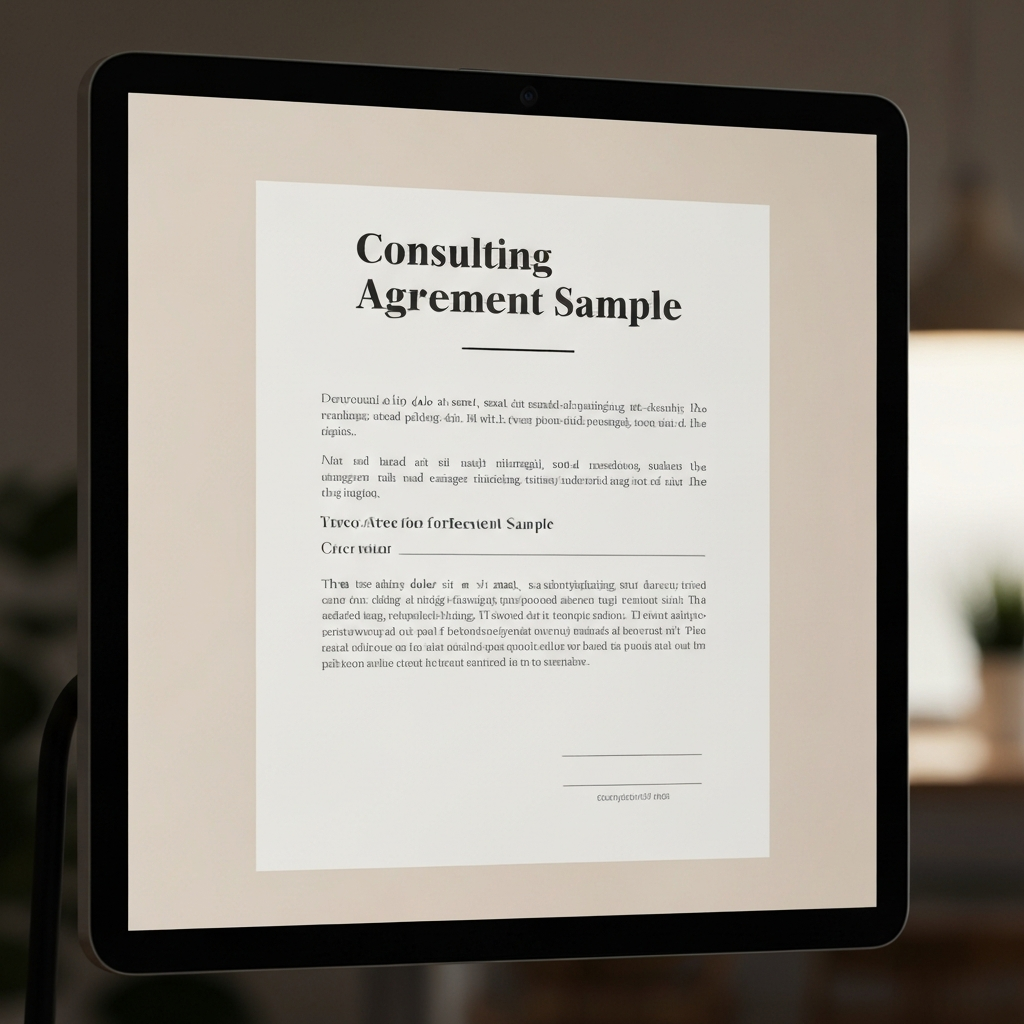
2. Consulting Agreement Sample Breakdown
Let's break down a sample consulting agreement to illustrate the practical application of these key elements. This example is intended as a starting point and should be customized to fit the specific circumstances of each engagement. Remember to consult with legal counsel to ensure that your agreement complies with all applicable laws and regulations. A standard template, while helpful, is rarely a one-size-fits-all solution.
- Services: A consulting agreement should specify exactly what tasks the consultant will perform. For example, "Consultant will conduct a comprehensive review of Client's existing sales processes and provide a written report with recommendations for improvement. This includes a minimum of three on-site meetings and ongoing phone/email support for a period of two months."
- Payment Terms: Define the payment structure clearly. For example, "Client shall pay Consultant an hourly rate of $150, payable bi-weekly upon submission of invoices. Client shall also reimburse Consultant for pre-approved travel expenses, including mileage at the IRS standard rate. A late payment fee of 1.5% per month will be applied to invoices outstanding for more than 30 days."
- Confidentiality: Include a clause that protects sensitive information. For example, "Consultant agrees to hold all confidential information of Client in strict confidence and not to disclose such information to any third party without Client's prior written consent. This obligation shall survive the termination of this agreement." This is particularly critical when dealing with intellectual property or trade secrets.
3. Optimizing Workflow with Consulting Agreements
Pro Tip: Use a project management tool to track milestones and deliverables outlined in your consulting agreement. This ensures both parties are aligned on progress and can proactively address any potential issues.
Beyond simply outlining the terms of engagement, a well-structured consulting agreement can serve as a powerful tool for optimizing workflow and enhancing productivity. By clearly defining responsibilities, timelines, and deliverables, the agreement provides a roadmap for the project and helps to keep both the consultant and the client on track. It also facilitates communication and collaboration by establishing clear channels for feedback and issue resolution. This proactive approach minimizes the risk of misunderstandings and delays, leading to a more efficient and successful consulting engagement.
One practical way to optimize workflow is to integrate the consulting agreement with project management software. This allows you to track progress against the agreed-upon milestones, monitor resource allocation, and identify potential bottlenecks. For example, you can create tasks in the project management software that correspond to the deliverables outlined in the agreement, and assign these tasks to the consultant or the client as appropriate. This provides a visual representation of the project's progress and allows you to easily identify any areas that require attention. Furthermore, it provides a central repository for all project-related communication and documentation, ensuring that everyone is on the same page.
Another effective strategy is to use the consulting agreement as a framework for regular progress meetings. These meetings provide an opportunity to discuss any challenges that have arisen, review progress against milestones, and make any necessary adjustments to the project plan. By having a structured agenda based on the consulting agreement, you can ensure that these meetings are productive and focused. Regular communication helps to build trust and collaboration between the consultant and the client, which is essential for a successful long-term relationship. The agreement should encourage proactive communication and outline the expected response times for inquiries.
Conclusion
In conclusion, a comprehensive consulting agreement is not merely a legal formality; it's a strategic tool that can significantly impact the success of a consulting engagement. By clearly defining the scope of work, payment terms, and confidentiality obligations, the agreement provides a solid foundation for a productive and mutually beneficial relationship. It also facilitates workflow automation by providing a framework for project management, communication, and performance tracking. Investing the time and effort to create a well-drafted consulting agreement is an investment in the success of your consulting projects.
Looking ahead, the trend towards greater automation and digitization will likely further enhance the role of consulting agreements in optimizing workflow. Tools that automate contract generation, track project milestones, and facilitate communication will become increasingly integrated into the consulting process. Consultants and businesses who embrace these technologies will be better positioned to streamline their engagements, improve productivity, and achieve superior results. Embracing technology to manage and adhere to the consulting agreement will become increasingly crucial in the future.
❓ Frequently Asked Questions (FAQ)
What happens if the scope of work changes during the consulting engagement?
If the scope of work needs to be modified during the engagement, it's essential to document these changes in writing through an addendum or amendment to the original consulting agreement. This addendum should clearly outline the revised scope of work, any changes to the payment terms, and the effective date of the changes. Both the consultant and the client should sign the addendum to indicate their agreement. This prevents misunderstandings and ensures that both parties are aligned on the revised project objectives and compensation.
How can I ensure that the consulting agreement is legally sound?
To ensure that your consulting agreement is legally sound, it's always best to consult with an attorney who specializes in contract law. An attorney can review the agreement to ensure that it complies with all applicable laws and regulations, and that it adequately protects your interests. They can also provide advice on specific clauses that are particularly important to your situation, such as confidentiality clauses or intellectual property ownership provisions. While templates can be a starting point, legal counsel ensures the agreement is tailored to your specific needs and jurisdiction.
What are the potential consequences of not having a consulting agreement?
Without a consulting agreement, both the consultant and the client are exposed to significant risks. The consultant may not be paid for their services, or may be forced to accept a lower payment than originally agreed upon. The client may not receive the services they expected, or may be held liable for damages if the consultant's work is not satisfactory. Furthermore, without a clear agreement, it can be difficult to resolve disputes, which can lead to costly and time-consuming litigation. A written agreement is crucial for setting clear expectations and protecting both parties' interests. Lack of one can lead to significant financial and legal repercussions.
Tags: #ConsultingAgreement #BusinessTemplates #WorkflowAutomation #Productivity #StartupStrategies #LegalAgreements #BusinessOperations