📖 5 min read
Managing business expenses effectively is crucial for maintaining financial health and making informed decisions. Without a robust system, tracking expenses can become a time-consuming and error-prone process, leading to inaccurate financial reports and missed opportunities for cost optimization. Using a business expense tracking template offers a streamlined and efficient way to monitor your spending, categorize expenses, and gain valuable insights into your financial performance. This blog post will explore the benefits of using such a template, how to choose the right one for your needs, and tips for maximizing its effectiveness.
1. Understanding the Importance of Expense Tracking
Expense tracking is the process of recording and categorizing all financial outflows incurred by a business. This includes everything from office supplies and travel expenses to marketing costs and employee salaries. Accurate expense tracking provides a clear picture of where your money is going, enabling you to identify areas where you can reduce spending and improve profitability. Ignoring this crucial aspect of financial management can lead to cash flow problems, inaccurate budgeting, and ultimately, hinder your business's growth potential.
Consider a small startup that doesn't meticulously track its marketing expenses. They might launch several campaigns across different platforms without knowing which ones are generating the best return on investment (ROI). By implementing an expense tracking template, they could easily categorize their marketing spend by campaign, platform, and even individual ad. This level of detail would allow them to quickly identify underperforming campaigns and reallocate resources to more profitable channels, leading to significant cost savings and improved marketing effectiveness.
Furthermore, accurate expense tracking is essential for tax compliance. By maintaining detailed records of your expenses, you can ensure that you are claiming all eligible deductions and avoiding potential penalties. A well-organized expense tracking template simplifies the process of preparing your tax returns, saving you time and reducing the risk of errors. From a broader perspective, it enables improved financial forecasting, smarter resource allocation, and demonstrates fiscal responsibility, all of which are crucial for securing funding and building trust with stakeholders.
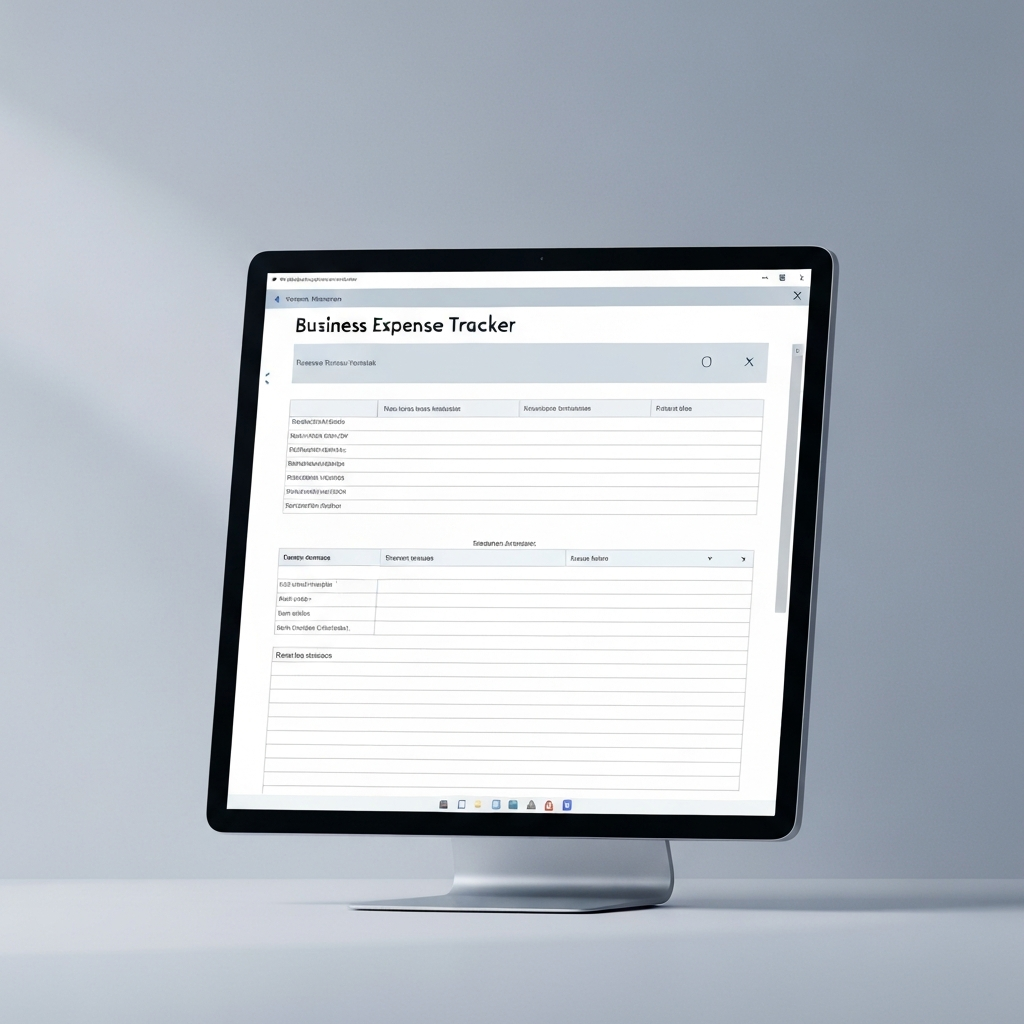
2. Key Features of an Effective Business Expense Tracking Template
A good business expense tracking template should be user-friendly, comprehensive, and customizable to meet your specific needs. It should also provide features that streamline the expense tracking process and facilitate analysis of your spending data. Let's explore some essential features to look for in a template:
- Categorization: The template should allow you to categorize expenses into different categories, such as travel, marketing, supplies, and utilities. This enables you to easily analyze your spending patterns and identify areas where you can cut costs. For example, a template might include pre-defined categories like "Travel - Flights," "Travel - Accommodation," and "Travel - Meals" for detailed tracking. You should be able to add, edit, and delete categories to fit your unique business requirements.
- Date and Payment Method: The template should include fields for recording the date of the expense and the payment method used (e.g., cash, credit card, debit card). This information is helpful for reconciling your bank statements and identifying potential discrepancies. Imagine you notice several large cash withdrawals marked as "Miscellaneous Expenses" without further details. This could indicate a potential security issue or a lack of proper documentation, prompting you to investigate further.
- Reporting and Analysis: The template should provide tools for generating reports and analyzing your expense data. This could include charts, graphs, and pivot tables that summarize your spending by category, time period, or other relevant criteria. For example, a template might automatically generate a pie chart showing the percentage of total expenses allocated to each category, allowing you to quickly identify your biggest spending areas. Such insights enable you to make data-driven decisions about your budget and resource allocation.
3. Maximizing the Value of Your Expense Tracking Template
Pro Tip: Integrate your expense tracking template with your accounting software to automate data entry and streamline your financial reporting process.
Once you have chosen the right business expense tracking template, it's important to use it effectively to maximize its value. This involves establishing clear processes for recording expenses, regularly reviewing your spending data, and using the insights you gain to make informed decisions. Simply having a template is not enough; you need to actively manage and utilize it to achieve the desired results. Without consistent data entry and analysis, the template will become outdated and lose its value.
One effective strategy is to designate a specific person or team to be responsible for expense tracking. This ensures that expenses are recorded accurately and consistently. Train employees on how to properly document expenses and submit receipts. Implementing an expense policy that outlines acceptable expense types, spending limits, and documentation requirements can further improve accuracy and compliance. Tools that integrate receipt scanning and automatic data entry can significantly reduce the manual effort required for expense tracking, making the process more efficient and less prone to errors. The data collected from using a template can be used to set benchmarks and track trends over time, making it easier to identify areas where expenses are increasing or decreasing.
By regularly reviewing your expense data, you can identify trends, patterns, and potential areas for improvement. For example, you might notice that your travel expenses are consistently higher than budgeted. This could prompt you to explore alternative travel arrangements, negotiate better rates with hotels, or implement stricter travel policies. The template allows for data-driven decision-making that ultimately leads to cost savings and improved profitability. It also promotes a culture of financial accountability within your organization, encouraging employees to be mindful of their spending and to adhere to established expense policies.
🔗 Recommended Reading
20260325-Monetizing-Your-Photography-Skills-Online-A-Comprehensive-Guide
Conclusion
In conclusion, a well-designed business expense tracking template is an invaluable tool for managing your finances effectively. It provides a streamlined and efficient way to monitor your spending, categorize expenses, and gain valuable insights into your financial performance. By choosing the right template, using it effectively, and integrating it with your accounting software, you can streamline your expense tracking process, improve your financial accuracy, and make informed decisions that will contribute to the long-term success of your business. Investing in a robust expense tracking system is an investment in your business's financial health and future.
Looking ahead, we can expect to see even more sophisticated expense tracking solutions emerge, leveraging technologies such as artificial intelligence (AI) and machine learning (ML) to automate data entry, identify fraudulent expenses, and provide predictive insights into future spending patterns. As businesses continue to operate in an increasingly complex and competitive environment, the ability to manage expenses effectively will become even more critical. Adapting to these changes and embracing new technologies will be essential for maintaining a competitive edge and achieving sustainable growth.
❓ Frequently Asked Questions (FAQ)
What are the key benefits of using a business expense tracking template?
Using a business expense tracking template provides several key benefits, including improved accuracy in financial reporting, better control over spending, and the ability to identify areas for cost savings. By meticulously recording and categorizing expenses, you gain a clear understanding of where your money is going, enabling you to make informed decisions about resource allocation and budget management. A template also simplifies tax preparation by providing organized documentation of deductible expenses, reducing the risk of errors and potential penalties. Ultimately, it promotes financial transparency and accountability within your organization.
What are some common mistakes to avoid when using an expense tracking template?
One common mistake is failing to consistently update the template with accurate and timely information. Delayed data entry can lead to inaccuracies and missed opportunities for cost optimization. Another mistake is not properly categorizing expenses, which can hinder your ability to analyze spending patterns and identify areas for improvement. It's also crucial to back up your template regularly to prevent data loss in case of technical issues. Finally, make sure to regularly review and reconcile your expense data with your bank statements to identify and correct any discrepancies.
How can I customize a business expense tracking template to fit my specific needs?
Customizing a business expense tracking template involves tailoring it to reflect your unique business operations and reporting requirements. Start by adding or modifying expense categories to align with your specific industry and activities. For example, a marketing agency might add categories such as "Social Media Advertising" and "Content Creation," while a restaurant might include "Food Costs" and "Labor Costs." You can also add custom fields to capture additional information, such as project codes or client names. Furthermore, consider integrating the template with other tools, such as accounting software or project management systems, to streamline your workflow and automate data entry. Ensure the template includes the correct currency and tax settings applicable to your location.
Tags: #ExpenseTracking #BusinessTemplates #WorkflowAutomation #FinancialManagement #SmallBusiness #StartupFinance #Accounting