📖 5 min read
In today's volatile business landscape, unexpected disruptions can strike at any moment. From natural disasters and cyberattacks to supply chain disruptions and pandemics, businesses face a multitude of potential threats. A well-defined Business Continuity Plan (BCP) serves as a roadmap for navigating these challenges, ensuring that critical operations can continue, or be quickly resumed, minimizing downtime and financial losses. A comprehensive BCP is not merely a document but a living, breathing strategy that needs regular review, testing, and updating to remain effective. This guide provides a detailed checklist to help you create a robust and actionable Business Continuity Plan, safeguarding your organization's future.
1. Risk Assessment and Impact Analysis
The first crucial step in developing a BCP is conducting a thorough risk assessment. This involves identifying potential threats, evaluating their likelihood of occurrence, and assessing the potential impact on your business operations. Consider a wide range of risks, including natural disasters (e.g., earthquakes, floods, hurricanes), technological failures (e.g., server outages, data breaches), human-caused events (e.g., cyberattacks, vandalism), and supply chain disruptions.
Next, perform a Business Impact Analysis (BIA) to determine the criticality of each business function. Identify which processes are essential for the survival of the organization and estimate the financial and operational losses that would result from their disruption. Prioritize these critical functions and allocate resources accordingly to ensure their rapid recovery. For example, if you are an e-commerce business, your order processing and fulfillment systems would likely be deemed critical, whereas a less frequently used reporting tool might be considered non-essential during a crisis.
The output of the risk assessment and BIA will inform the scope and priorities of your BCP. By understanding the threats you face and the most critical functions that need protection, you can develop targeted strategies and allocate resources effectively. This ensures that your BCP addresses the most significant risks and minimizes the potential impact on your business. For instance, a financial institution might prioritize data security and regulatory compliance in their BCP, while a manufacturing company might focus on supply chain resilience and production capacity.
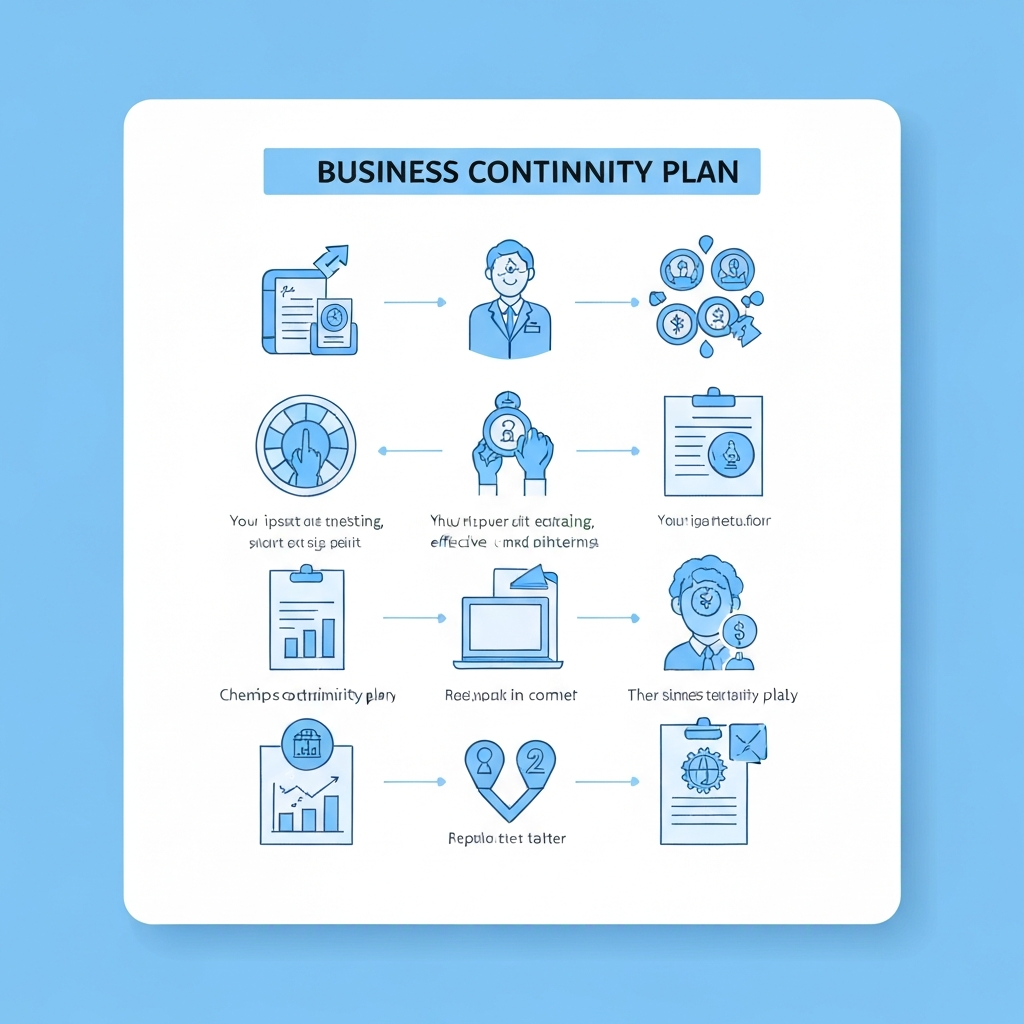
2. Developing the Business Continuity Plan
Once you have completed the risk assessment and BIA, you can begin developing the actual Business Continuity Plan document. This document should outline the specific steps and procedures that will be followed in the event of a disruption. It should also clearly define roles and responsibilities, ensuring that everyone in the organization knows what is expected of them during a crisis.
- Communication Plan: A comprehensive communication plan is vital for keeping employees, customers, and stakeholders informed during a disruption. This plan should include pre-defined communication channels (e.g., email, phone, intranet), contact lists, and templates for communicating different types of information. For example, define protocols for notifying employees of a building closure due to a fire or for informing customers about a service outage caused by a cyberattack. Ensure that the communication plan addresses both internal and external audiences and that it is regularly tested and updated.
- Recovery Strategies: Develop detailed recovery strategies for each critical business function. These strategies should outline the steps that will be taken to restore operations to normal as quickly as possible. Consider alternative work locations, data backup and recovery procedures, and temporary solutions for essential equipment or services. For example, establish a remote work policy that allows employees to work from home or a pre-arranged alternate office location. Implement a robust data backup system that automatically replicates data to an offsite location. Secure agreements with backup suppliers for critical raw materials or components.
- Testing and Training: Regularly test and train employees on the BCP to ensure that they are familiar with the procedures and their roles. Conduct simulations of different disruption scenarios to identify any weaknesses in the plan and to improve employee preparedness. For example, conduct an annual tabletop exercise where key personnel walk through the BCP procedures for a specific scenario, such as a ransomware attack. Organize regular training sessions on data security best practices or evacuation procedures. Document the results of these tests and training sessions and use them to update the BCP accordingly.
3. Maintaining and Updating the BCP
Pro Tip: Don't let your BCP gather dust on a shelf. Treat it as a living document that requires regular review and updates to remain relevant and effective.
A Business Continuity Plan is not a one-time project; it's an ongoing process. The business environment is constantly changing, and new threats are always emerging. Therefore, it is essential to regularly review and update your BCP to ensure that it remains relevant and effective. This should be done at least annually, or more frequently if there have been significant changes to your business operations, technology infrastructure, or the threat landscape.
Establish a process for reviewing and updating the BCP, including identifying responsible parties and setting timelines. Incorporate feedback from employees, stakeholders, and external experts. Consider conducting a post-incident review after any actual disruptions to identify areas for improvement. For example, after experiencing a minor service outage, analyze the effectiveness of your recovery procedures and identify any bottlenecks or inefficiencies. Use this information to refine your BCP and improve your response capabilities.
By regularly maintaining and updating your BCP, you can ensure that it remains a valuable tool for protecting your business from disruptions. This proactive approach will help you minimize downtime, reduce financial losses, and maintain customer trust in the face of adversity. Regular updates will keep the BCP relevant and useful and improve employee preparedness.
🔗 Recommended Reading
20260323-Creating-Effective-Business-Contracts-A-Comprehensive-Guide
Conclusion
A Business Continuity Plan is an essential component of any organization's risk management strategy. By proactively identifying potential threats, developing comprehensive recovery strategies, and regularly testing and updating the plan, businesses can significantly improve their resilience and minimize the impact of disruptions. Investing in a robust BCP is not just about protecting your assets; it's about ensuring the long-term viability and sustainability of your organization.
The dynamic nature of the business environment demands a continuous commitment to business continuity planning. As technology evolves and new threats emerge, your BCP must adapt accordingly. By embracing a proactive and iterative approach, you can ensure that your organization is well-prepared to navigate any challenge and emerge stronger on the other side. Future trends include increased use of AI for threat detection and automated recovery processes.
❓ Frequently Asked Questions (FAQ)
What are the key components of a Business Continuity Plan?
A comprehensive BCP typically includes several key components. These include a risk assessment and business impact analysis, which identify potential threats and their impact on critical business functions. Furthermore, a well-defined communication plan is essential for keeping stakeholders informed during a disruption. Finally, robust recovery strategies outline the steps needed to restore operations, and regular testing and training ensure the plan's effectiveness.
How often should a Business Continuity Plan be reviewed and updated?
A BCP should be reviewed and updated at least annually, or more frequently if there have been significant changes to the business environment. This includes changes to business operations, technology infrastructure, or the threat landscape. Regular reviews ensure that the plan remains relevant and effective in addressing current risks. Additionally, post-incident reviews after any actual disruptions should be conducted to identify areas for improvement.
What are the benefits of having a well-defined Business Continuity Plan?
A well-defined BCP offers numerous benefits, including reduced downtime and financial losses in the event of a disruption. It also ensures the continuity of critical business functions, minimizing the impact on customers and stakeholders. Furthermore, a BCP can enhance an organization's reputation and maintain customer trust by demonstrating a proactive approach to risk management. Ultimately, a BCP contributes to the long-term viability and sustainability of the business.
Tags: #BusinessContinuity #RiskManagement #DisasterRecovery #BCP #BusinessPlanning #WorkflowAutomation #Resilience