AI-Powered-Music-Composition-A-Comprehensive-Guide
📖 5 min read
The intersection of artificial intelligence and music is no longer a futuristic fantasy; it's a vibrant, evolving reality. AI-powered music composition tools are democratizing the creation process, enabling both seasoned musicians and aspiring artists to explore uncharted sonic territories. From generating novel melodies and harmonies to orchestrating entire symphonies, AI is transforming the way music is conceived, produced, and experienced. This comprehensive guide delves into the intricacies of AI-driven music composition, exploring its capabilities, techniques, and the profound impact it's having on the music industry. We'll navigate the ethical considerations, discuss the latest advancements, and equip you with the knowledge to harness the power of AI in your own musical endeavors. Prepare to embark on a journey that will redefine your understanding of music creation in the age of artificial intelligence.
1. Understanding AI Music Composition Technologies
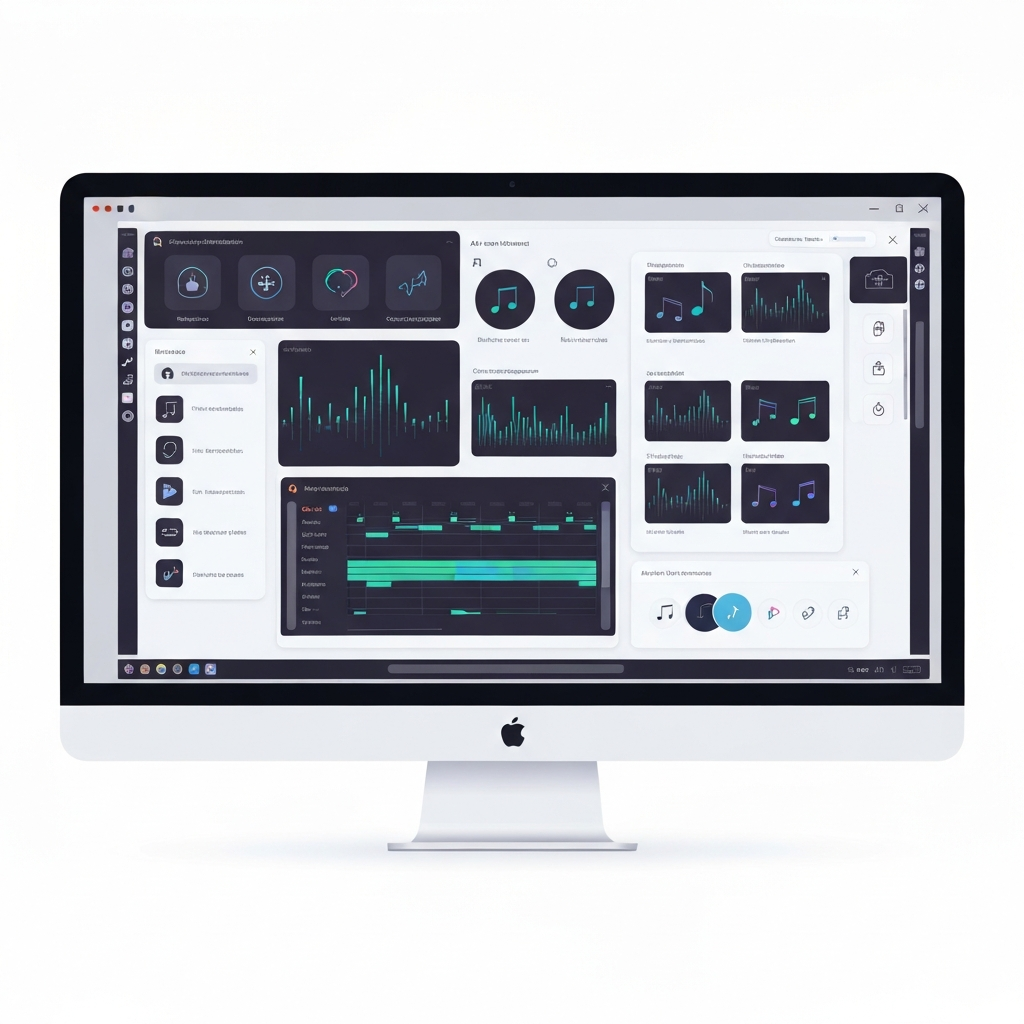
At its core, AI music composition leverages machine learning algorithms to analyze vast datasets of existing music, identifying patterns, structures, and stylistic nuances. These algorithms, often based on neural networks, can then generate new musical material that emulates or expands upon the learned patterns. The process involves training the AI on a corpus of music, allowing it to develop a statistical understanding of melody, harmony, rhythm, and orchestration. Different AI models specialize in various aspects of music creation, some excelling at generating melodies, while others focus on harmonic progressions or rhythmic patterns.
One popular approach involves using recurrent neural networks (RNNs), which are particularly well-suited for processing sequential data like music. An RNN can be trained to predict the next note or chord in a sequence, based on the preceding notes or chords. Generative Adversarial Networks (GANs) offer another powerful technique, where two neural networks compete against each other: a generator that creates music and a discriminator that tries to distinguish between AI-generated music and real music. This adversarial process leads to increasingly realistic and creative musical outputs. For example, a GAN could be trained on jazz music, learning to improvise solos in a similar style to legendary jazz musicians.
The practical implications of these technologies are vast. Musicians can use AI tools to overcome creative blocks, generate new ideas, or experiment with different styles. Composers can leverage AI to automate tedious tasks like transcribing melodies or generating variations on a theme. Film and game developers can use AI to create dynamic soundtracks that adapt to the unfolding narrative. Moreover, AI is making music creation more accessible to individuals without formal musical training, empowering them to express their creativity and share their musical visions with the world.
2. Prompt Engineering for Musical AI
While AI provides the computational power for music generation, the quality and creativity of the output heavily depend on the input provided – the prompt. Prompt engineering is the art and science of crafting effective instructions that guide the AI towards generating the desired musical results. A well-designed prompt can unlock the full potential of AI music composition tools, allowing you to create music that aligns with your artistic vision.
- Specifying Genre and Style: The most basic form of prompting involves specifying the genre and style of music you want the AI to generate. For example, you could prompt the AI to create a "upbeat pop song," a "somber classical piece," or a "funky jazz improvisation." Be as specific as possible, incorporating elements of different styles or artists. Describing the emotional tone of the music (e.g., "melancholic," "joyful," "mysterious") can further refine the output.
- Defining Musical Parameters: Go beyond genre and style by defining specific musical parameters. This could include specifying the tempo, key signature, time signature, instrumentation, and harmonic complexity. For instance, you might prompt the AI to generate a "slow ballad in C major with a piano and strings arrangement" or a "fast-paced electronic dance track with a driving bassline and syncopated rhythms." Providing specific melodic or rhythmic motifs can also help the AI create music that aligns with your existing compositions.
- Incorporating Contextual Information: Provide the AI with contextual information that inspires the music. This could include a description of a scene, a character, an emotion, or a story. For example, you could prompt the AI to create a "soundtrack for a suspenseful scene in a dark forest" or a "theme song for a heroic character embarking on a quest." This contextual information helps the AI understand the desired mood and atmosphere, resulting in music that is more evocative and emotionally resonant.
3. Ethical Considerations and the Future of AI Music
The rise of AI music raises critical questions about copyright, ownership, and the role of human creativity. Understanding these ethical implications is crucial for responsible innovation in the field.
The increasing sophistication of AI music composition tools inevitably leads to ethical dilemmas surrounding copyright and intellectual property. If an AI generates a piece of music that closely resembles an existing song, who owns the copyright? Is it the programmer who created the AI, the user who provided the prompt, or the AI itself? These questions are complex and currently lack clear legal answers. It's essential to consider these implications and strive for transparency in the use of AI in music creation. Clear labeling of AI-generated music could help distinguish it from human-created works, allowing listeners to make informed decisions about their consumption and support of artists.
Furthermore, the accessibility of AI music tools raises concerns about the devaluation of human musicianship. As AI becomes capable of generating high-quality music with minimal human input, the economic prospects for musicians could be threatened. It's important to consider how to support and empower musicians in this evolving landscape. One approach is to view AI as a tool that augments human creativity rather than replacing it. Musicians can leverage AI to enhance their songwriting, production, and performance capabilities, creating new and innovative musical experiences. Education and training programs can equip musicians with the skills to utilize AI effectively, ensuring that they remain competitive in the music industry.
The future of AI music is likely to involve a symbiotic relationship between humans and machines. AI will continue to automate repetitive tasks, generate new ideas, and provide musicians with powerful tools to express their creativity. However, human composers and musicians will retain the crucial role of shaping the artistic vision, imbuing the music with emotion, and connecting with audiences on a personal level. The challenge lies in finding a balance between leveraging the power of AI and preserving the unique value of human creativity.
🔗 Recommended Reading
Conclusion
AI-powered music composition is a transformative technology that is reshaping the music industry. From generating novel melodies and harmonies to orchestrating entire symphonies, AI is empowering musicians and non-musicians alike to explore new sonic frontiers. By understanding the underlying technologies, mastering prompt engineering, and addressing the ethical considerations, we can harness the power of AI to create a more diverse, innovative, and accessible musical landscape. The collaboration between human creativity and artificial intelligence holds immense potential for unlocking new forms of musical expression and enriching the human experience.
As AI continues to evolve, we can expect even more sophisticated music composition tools to emerge. These tools will likely incorporate advanced features such as real-time collaboration, personalized music generation, and seamless integration with other creative software. The future of music creation will be defined by the synergy between human artistry and artificial intelligence, leading to a new era of musical innovation and accessibility. Prepare to witness the emergence of entirely new genres and styles of music that are only possible through the collaboration between humans and AI.
❓ Frequently Asked Questions (FAQ)
How does AI actually compose music?
AI models typically learn musical patterns by analyzing large datasets of existing music. They identify statistical relationships between notes, chords, rhythms, and other musical elements. Once trained, the AI can generate new musical sequences that reflect the learned patterns. For instance, if trained on classical music, it might produce melodies and harmonies characteristic of that genre. Different AI architectures, like recurrent neural networks (RNNs) or transformers, are used, each with strengths in capturing different aspects of musical structure and style.
Can AI truly be creative, or is it just mimicking existing music?
While AI models learn from existing music, they are capable of generating novel compositions that go beyond simple mimicry. By combining elements from different sources and exploring variations on learned patterns, AI can create music that is original and unexpected. The level of creativity depends on the complexity of the AI model, the quality of the training data, and the user's prompts. Some AI compositions can even surprise experienced musicians with their inventiveness and emotional depth. It's important to remember that "creativity" itself is a complex concept and its application to AI is still debated.
What are the best AI music composition tools available right now?
Several AI music composition tools are available, each with its strengths and weaknesses. Some popular options include Amper Music (now Shutterstock AI Music), which offers a user-friendly interface for generating royalty-free music; Jukebox, a tool from OpenAI that can generate music with lyrics; and Google's Magenta project, which provides a platform for exploring various AI music experiments. The best tool for you will depend on your specific needs and technical expertise. Consider factors such as the range of musical styles supported, the ease of use, the degree of customization available, and the pricing model when making your selection. Research and experimentation are key to finding the tool that best suits your workflow.
Tags: #AI #MusicComposition #GenerativeAI #PromptEngineering #FutureOfMusic #AIMusic #MusicTech