📖 5 min read
The world of music is undergoing a profound transformation, fueled by the rapid advancements in artificial intelligence. AI music composition is no longer a futuristic fantasy but a tangible reality, offering musicians and enthusiasts alike powerful new tools for creative expression. This guide delves into the core concepts, practical applications, and ethical considerations surrounding AI in music, providing a comprehensive overview of this exciting field. From generating melodies and harmonies to assisting with arrangement and orchestration, AI is reshaping the landscape of music creation. Understanding these advancements is crucial for anyone involved in the music industry, as it promises to unlock unprecedented creative potential and redefine the boundaries of musical innovation. Let's explore how AI is changing the way music is composed, produced, and experienced.
1. Understanding AI Music Composition
AI music composition refers to the use of artificial intelligence algorithms and machine learning models to generate, manipulate, or assist in the creation of musical pieces. This encompasses a wide range of techniques, from simple algorithmic composition to complex deep learning models trained on vast datasets of musical scores. The core principle involves feeding musical data into AI systems, allowing them to learn patterns, structures, and styles from existing music. Subsequently, the AI can use this knowledge to generate new musical ideas, variations, or complete compositions. These systems often incorporate elements of music theory, such as harmony, melody, and rhythm, to produce coherent and aesthetically pleasing results.
One of the key components of AI music composition is the use of machine learning models, particularly neural networks. Recurrent Neural Networks (RNNs) and Transformers are commonly employed to model sequential data, making them well-suited for capturing the temporal dependencies inherent in music. These models can be trained on large datasets of music, learning to predict the next note or chord in a sequence. For example, a system trained on Bach chorales can generate new chorales in a similar style, adhering to the rules of counterpoint and harmony. Generative Adversarial Networks (GANs) are another approach, where one network generates music and another network evaluates its quality, leading to a continuous refinement process.
The practical implications of AI music composition are vast. It can assist composers in overcoming creative blocks by generating novel ideas or providing alternative arrangements. It can also be used to create personalized music experiences, tailoring the music to the listener's preferences or emotional state. Furthermore, AI can automate certain aspects of music production, such as generating background music for videos or creating jingles for advertisements. The technology lowers the barrier to entry for aspiring musicians, providing tools to create music without requiring extensive formal training. However, it also raises questions about the role of human creativity and the potential for AI to displace human composers.
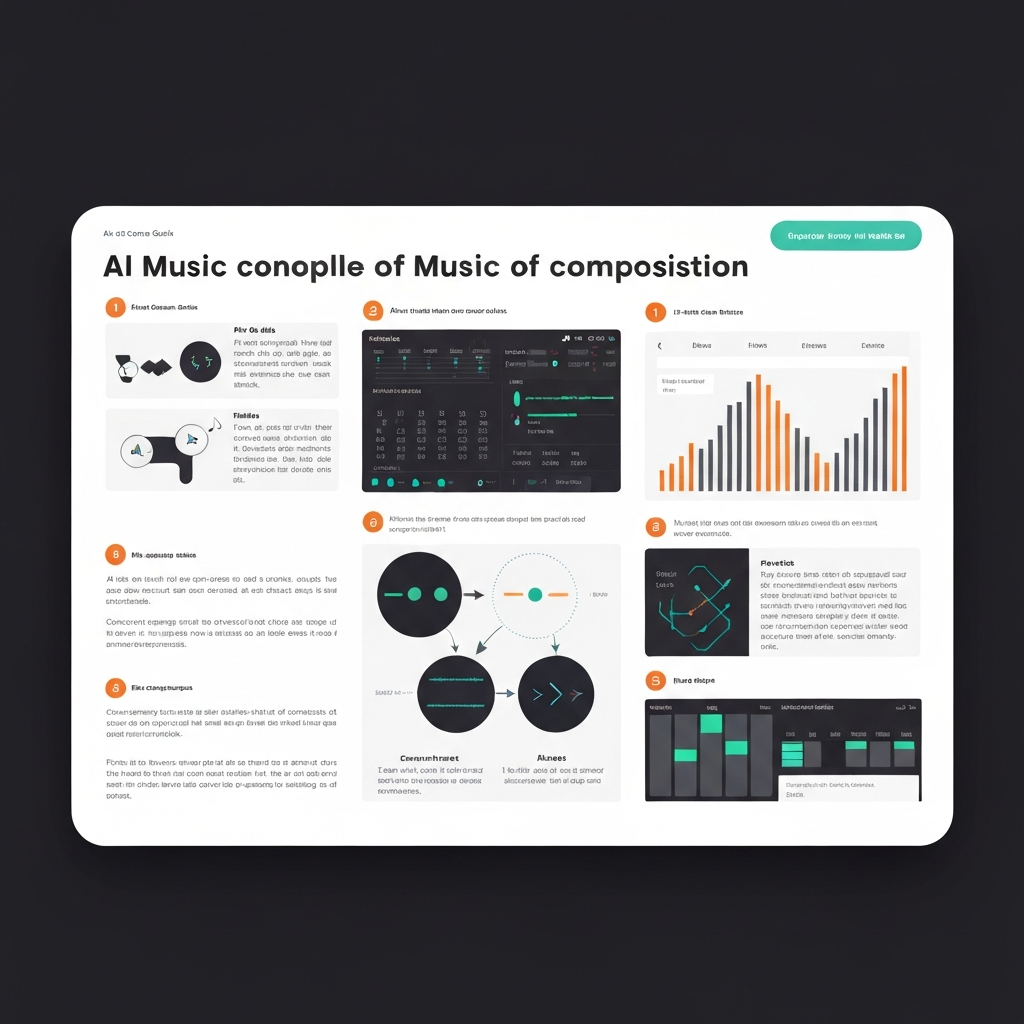
2. Key AI Technologies in Music Creation
Several AI technologies are driving the advancements in music creation, each offering unique capabilities and approaches to generating and manipulating music. These technologies range from rule-based systems to sophisticated deep learning models, each with its strengths and limitations. Understanding these technologies is crucial for navigating the evolving landscape of AI music composition and leveraging them effectively in musical projects.
- Algorithmic Composition: Algorithmic composition involves using pre-defined rules and algorithms to generate music. These rules can be based on music theory principles, mathematical formulas, or statistical models. For instance, a simple algorithm might generate a melody by randomly selecting notes within a specific scale and rhythm. While often less sophisticated than deep learning approaches, algorithmic composition provides a deterministic and controllable way to create music. It's beneficial for generating repetitive or predictable musical patterns, such as background music or sound effects. The advantage is its simplicity and transparency, as the generated music is directly determined by the programmed rules.
- Recurrent Neural Networks (RNNs): RNNs are a type of neural network designed to process sequential data, making them ideal for modeling the temporal dependencies in music. These networks can learn patterns and structures from musical sequences, such as melodies, harmonies, and rhythms. By training an RNN on a large dataset of music, it can learn to predict the next note or chord in a sequence, thereby generating new music in a similar style. Long Short-Term Memory (LSTM) networks, a variant of RNNs, are particularly effective at capturing long-range dependencies in music, allowing them to generate more coherent and structured compositions.
- Transformers: Transformers are a more recent type of neural network that has revolutionized natural language processing and is now making significant inroads in music composition. Unlike RNNs, Transformers can process entire sequences in parallel, enabling them to capture long-range dependencies more efficiently. They use a mechanism called self-attention, which allows them to weigh the importance of different parts of the input sequence when generating the output. This makes them particularly well-suited for generating complex and nuanced musical compositions. Models like Music Transformer have demonstrated impressive capabilities in generating long and coherent musical pieces across various genres.
3. Prompt Engineering for AI Music Generation
Precise prompting is the key to unlocking the full potential of AI music generators. Experiment with different styles, instruments, and emotional cues to refine your output.
Prompt engineering is the art and science of crafting effective prompts for AI models to generate desired outputs. In the context of AI music generation, prompt engineering involves carefully designing prompts that guide the AI to create music with specific characteristics. This includes specifying the genre, style, instrumentation, tempo, key, and emotional tone of the desired music. A well-crafted prompt can significantly improve the quality and relevance of the generated music, enabling users to create music that aligns with their creative vision.
Effective prompt engineering requires a deep understanding of both music theory and the capabilities of the AI model being used. It involves experimenting with different phrasing and keywords to determine which prompts elicit the best results. For example, instead of simply asking for "a happy song," a more effective prompt might specify "an upbeat pop song with a major key, fast tempo, and positive lyrics." Providing concrete examples of existing songs with similar characteristics can also help the AI model understand the desired style. Furthermore, incorporating elements of musical structure, such as specifying the form (e.g., verse-chorus-bridge) or chord progression, can further refine the generated music.
The value of mastering prompt engineering for AI music generation lies in its ability to empower musicians and non-musicians alike. It allows individuals with limited musical training to create sophisticated and personalized music experiences. For professional musicians, prompt engineering can serve as a powerful tool for brainstorming ideas, generating variations on existing themes, and automating repetitive tasks. As AI music generation technology continues to evolve, the ability to craft effective prompts will become an increasingly valuable skill, enabling users to unlock the full creative potential of these tools and push the boundaries of musical innovation.
🔗 Recommended Reading
20260323-AI-Powered-Cybersecurity-Threat-Detection-A-Comprehensive-Guide
Conclusion
AI music composition represents a paradigm shift in the way music is created and experienced. From algorithmic generation to sophisticated deep learning models, AI technologies are empowering musicians and enthusiasts alike with unprecedented creative tools. By understanding the core concepts, key technologies, and ethical considerations surrounding AI in music, we can harness its potential to unlock new possibilities and redefine the boundaries of musical innovation. The future of music creation is undoubtedly intertwined with the continued advancements in AI, offering a rich and exciting landscape for exploration and discovery.
Looking ahead, we can expect to see even more sophisticated AI models capable of generating music with greater nuance, complexity, and emotional depth. The integration of AI with other technologies, such as virtual reality and augmented reality, will further enhance the immersive and interactive nature of music experiences. However, it is crucial to address the ethical implications of AI music composition, ensuring that it is used responsibly and that human creativity remains at the heart of the musical process. The journey of AI in music is just beginning, and its impact on the music industry and society as a whole will continue to unfold in the years to come.
❓ Frequently Asked Questions (FAQ)
How can AI help with overcoming writer's block in music composition?
AI can serve as a potent tool for overcoming writer's block by providing a wealth of fresh ideas and novel musical motifs. By inputting basic parameters such as genre, tempo, or desired mood, AI algorithms can generate a variety of melodies, chord progressions, and rhythmic patterns that might not have occurred to the composer otherwise. This can act as a springboard for further development, allowing the composer to refine and personalize the AI-generated material to fit their artistic vision. Moreover, AI can also suggest alternative arrangements or orchestrations, offering new perspectives on existing musical ideas.
What are the ethical considerations surrounding AI-generated music?
Several ethical considerations arise with the increasing prevalence of AI-generated music, primarily concerning copyright and ownership. If an AI model is trained on a vast dataset of copyrighted music, questions arise about whether the generated music infringes on those copyrights, even if it doesn't directly copy any specific work. Determining the ownership of AI-generated music can also be complex, as it involves the contributions of both the AI developer and the user who provides the prompts. Another concern is the potential for AI to devalue the work of human composers, particularly if AI-generated music becomes widely available at a lower cost. It is imperative to develop clear legal and ethical frameworks to address these issues and ensure that AI music composition benefits both creators and consumers.
How does AI impact the role of human composers and musicians?
AI presents both challenges and opportunities for human composers and musicians. On one hand, it can automate certain tasks, such as generating background music or transcribing musical scores, potentially reducing the demand for human labor in those areas. On the other hand, AI can serve as a powerful tool for enhancing human creativity, allowing composers to explore new ideas, experiment with different styles, and overcome creative blocks. The role of the human composer may evolve from being the sole creator to becoming a curator and collaborator, guiding the AI to generate music that aligns with their artistic vision. Ultimately, the successful integration of AI into the music industry will require a focus on collaboration between humans and machines, leveraging the strengths of both to create innovative and meaningful musical experiences.
Tags: #AIMusic #GenerativeAI #MusicComposition #PromptEngineering #AIinMusic #FutureofMusic #MusicTech